
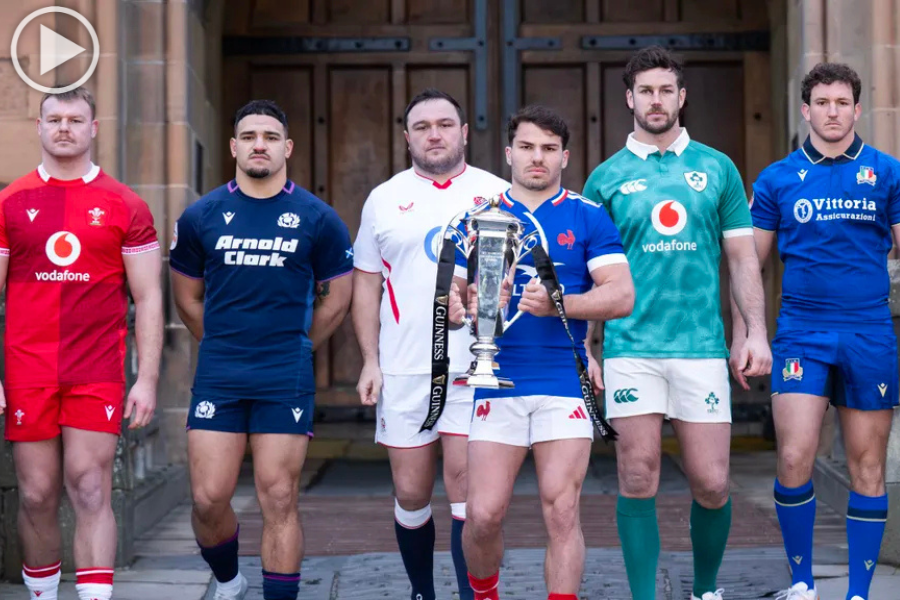

The Six Nations rarely lacks drama, but 2026 feels primed for something special. A compressed six-week format, a Thursday-night opener in Paris and a final-round France v England decider combine to make this one of the most delicately balanced championships in years. With England surging, Ireland bruised but dangerous, and Scotland hovering between brilliance and frustration, the margins could not be tighter.
Yet when home advantage, squad dynamics and key returnees are weighed together, France emerge — narrowly — as the team best placed to lift the trophy.
France: Home advantage, Dupont’s return — and a bold gamble
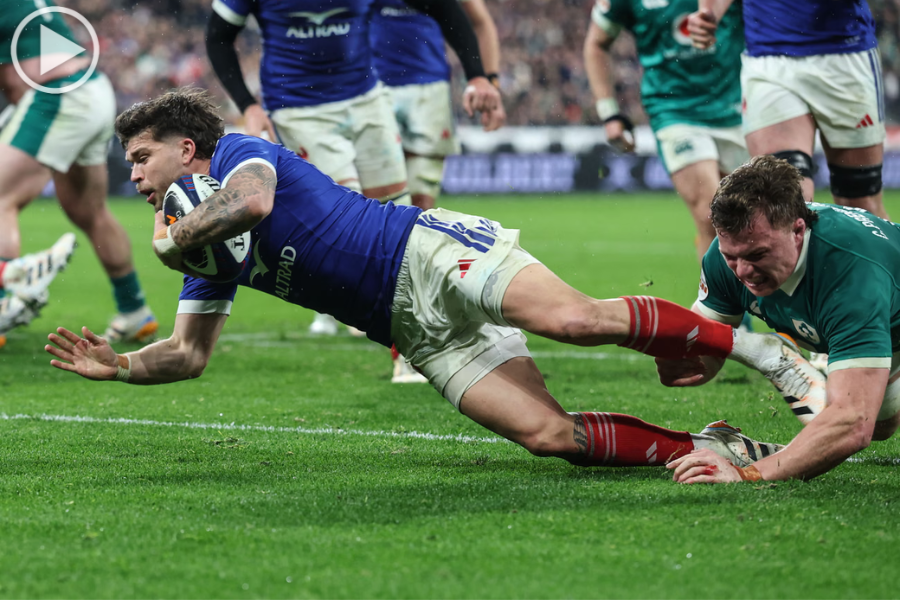
France begin as defending champions and benefit from the most favourable fixture sequence: Ireland and England both visit Paris. In a championship often settled by one away scalp, this alone carries enormous weight.
The biggest boost, however, is the return of Antoine Dupont, back as captain after a turbulent year. He ruptured his cruciate ligaments in the 2025 Six Nations, then missed further Test rugby due to Olympic sevens commitments, making his comeback one of the defining storylines of the tournament. As one observer put it, he remains “the north star for all other scrum-halves”.
Around him, France possess devastating pace and creativity through Matthieu Jalibert, Thomas Ramos and Louis Bielle-Biarrey, the latter now widely regarded as the competition’s most lethal finisher.
But there is also risk. Fabien Galthié’s decision to omit senior figures such as Damian Penaud, Gregory Alldritt and Gaël Fickou has been described internally as a “squad cull” — and externally as a “Galthié gamble”. This is not simply depth management; it is a conscious reshaping of leadership.
France’s forward power has also been emotionally and structurally shaken by the forced retirement of Uini Atonio, who suffered a heart attack and was compelled to end his career. Galthié said of him:
“He never gave up. He showed the way through his behaviour — always with a smile and talent.”
Losing such a cornerstone of the scrum could yet test French solidity in tight matches.
Still, if France defeat Ireland on opening night, their path towards another title — and possibly a Grand Slam — becomes unmistakably clear.
England: Momentum, depth and belief
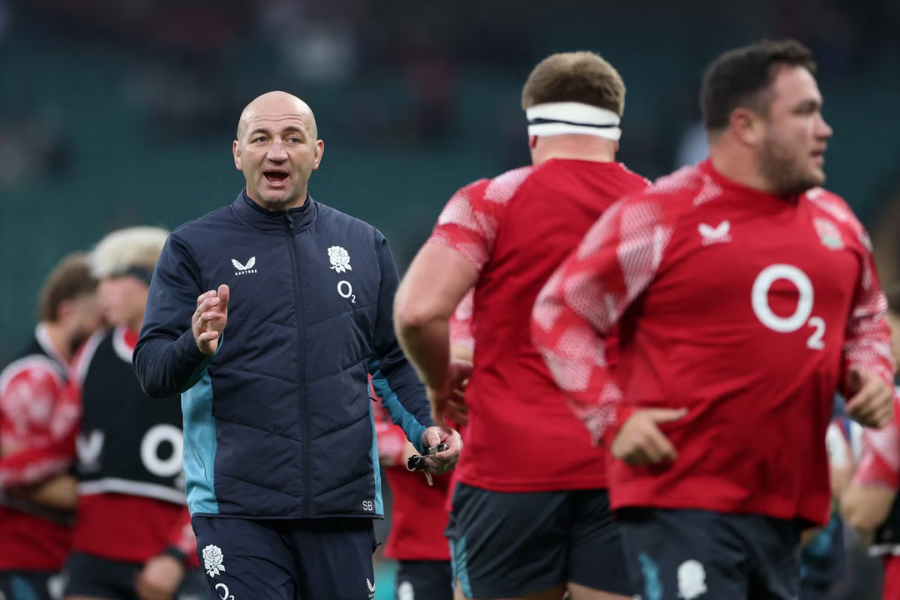
England arrive with rare authority. Eleven consecutive Test wins have transformed Steve Borthwick’s tenure from cautious rebuild into genuine title charge. The balance between structure and ambition now feels right: territorial control through kicking, combined with explosive strike power out wide.
Few squads match England for depth. Their back row options alone could field multiple international combinations, while wings such as Immanuel Feyi-Waboso and Henry Arundell offer genuine game-breaking speed. At fly-half, George Ford’s control and composure remain central to England’s tactical identity.
Borthwick himself has framed the climax with confidence:
“We want England fans flooding across the Channel to Paris to come and watch the team in a massive encounter on the final round.”
The challenge, however, is geographical. England’s biggest obstacles lie away from home — particularly Murrayfield in round two, and potentially the championship decider in Paris. History suggests England rarely finish titles comfortably on French soil, no matter their form.
Ireland: Injured, transitional — but never out
Ireland enter 2026 in unfamiliar territory: respected but uncertain. A golden generation is receding, and injuries have stripped Andy Farrell’s squad of key figures early in the tournament. Missing Andrew Porter, Robbie Henshaw, Mack Hansen and Bundee Aki severely weakens Ireland’s physical and midfield threat.
Their opening run — France away, then England away — could define their championship before it fully begins. Lose both, and hopes of silverware diminish rapidly.
Yet Ireland remain tactically astute and mentally resilient. Home fixtures against Italy, Wales and Scotland offer scope to rebuild momentum, and Farrell’s reputation as a strategist ensures Ireland will not lack ideas — only personnel.
Scotland: Between contenders and pretenders
Scotland continue to hover frustratingly between promise and proof. On their day, with Finn Russell, Huw Jones and Blair Kinghorn, they play some of the most expansive rugby in Europe. But recurring collapses from winning positions have become their defining flaw.
With early fixtures away to Italy and Wales, followed by England at home, Scotland have the chance to place themselves in contention — but history suggests inconsistency will again be their undoing.
They may not win the championship, but they remain well placed to decide who does.
Italy: Progress, but still fragile
Italy’s upward curve continues. A victory over Wales last season was no longer treated as a miracle, but as expectation — a sign of cultural shift. Their backline creativity, led by Paolo Garbisi and Tommaso Menoncello, offers genuine attacking threat.
However, injuries to key players such as Ange Capuozzo reduce their capacity to convert competitiveness into consistency. Italy are capable of shaping the tournament, but still unlikely to escape the bottom two.
Wales: Rebuilding amid structural crisis
Wales arrive in perhaps their most precarious position of the professional era. Successive wooden spoons, deep-rooted governance issues, and a recent 73–0 defeat to South Africa underline how far standards have fallen. As one assessment bluntly put it, Welsh rugby remains “mired in a mess of its own making.”
There are flashes of attacking cohesion, but optimism must be tempered by context: Wales face a brutal opening schedule, beginning away to England, followed by France, Scotland and Ireland.
Avoiding another last-place finish is the realistic benchmark. Anything more would represent genuine overperformance.
The format factor: Why depth matters more than ever
The removal of the opening fallow week compresses the championship into six consecutive weeks, placing unprecedented emphasis on squad depth, rotation and injury management. This structural change favours teams like France and England, whose benches can replicate starting XV quality.
Momentum will matter more too. Slow starts are harder to recover from, making the opening clash between France and Ireland one of the most consequential in recent Six Nations history.
Top try scorer: Louis Bielle-Biarrey
With Damian Penaud absent, the spotlight falls squarely on Louis Bielle-Biarrey. His acceleration, anticipation and finishing instincts make him the most natural try-scorer in the competition. Playing in a side expected to dominate territory — particularly at home — he looks the standout candidate for top scorer honours.
Our writers’ predictions
Writer A
France, England, Scotland, Ireland, Italy, Wales
Writer B
England, France, Ireland, Scotland, Wales, Italy
Writer C
France, England, Ireland, Scotland, Italy, Wales
Consensus forecast:
- France
- England
- Ireland
- Scotland
- Italy
- Wales
Watch out for…
- Hollie Davidson, who will become the first female referee to take charge of a men’s Six Nations match — a landmark moment for rugby officiating.
- Antoine Dupont’s leadership return, reshaping both France’s tempo and emotional identity.
- The final-round clash in Paris, which could decide the title under floodlights.
- England’s depth bench, potentially decisive in a tournament with no early rest weeks.
- Italy at home, where their confidence and crowd energy continue to make them dangerous.
Final verdict
England’s momentum is undeniable, Ireland’s pedigree remains formidable, and Scotland’s potential still tantalises. But championships are often settled not by form alone, but by structural advantages and timing.
France’s combination of home fixtures against direct rivals, the return of Antoine Dupont as captain, and a backline built for modern attacking rugby gives them the clearest path to silverware — even accounting for the risks of Galthié’s bold squad refresh and the emotional loss of Uini Atonio.
If the title comes down to Paris on the final weekend, as many expect, France once again look best equipped to thrive where pressure burns brightest.