
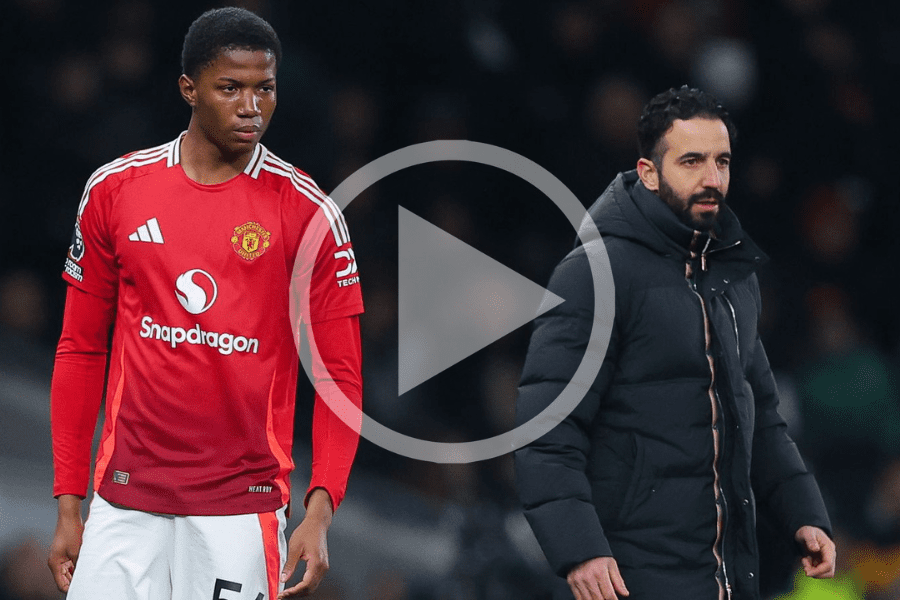
Manchester United head coach Ruben Amorim has recently intensified scrutiny of several of his club’s young prospects while also shaping plans for the upcoming January transfer window. Amorim’s comments and actions have sparked debate over his management style and his vision for the team’s future under mounting pressure.
Amorim has openly criticised a perceived sense of entitlement among some academy products at the club, highlighting defenders Harry Amass and striker Chido Obi as examples of young players currently failing to meet his performance standards. Both players reportedly reacted on social media to his public remarks, deleting posts shortly afterwards. At the same time, Oliveira Kobbie Mainoo has become a focal point in discussions around youth utilisation, as he has seen limited Premier League minutes and recent gestures from family members have drawn further attention to his situation. Amorim insists squad selection is based on merit and tactical requirements rather than external pressure.
The tension between Amorim and United’s younger players reflects a broader conversation within the club about the role of academy graduates in the first-team setup. Despite United’s historical emphasis on youth development, Amorim’s approach to squad rotation and his commitment to his own style of play have sometimes resulted in limited opportunities for home-grown talents. The manager maintains that decisions are taken with the team’s competitive interests in mind, emphasising his intention to win matches above all else.
Off the pitch, United are preparing for potential activity in the January transfer window to strengthen key areas. One prominent target is Bournemouth winger Antoine Semenyo, whose consistent Premier League performances have attracted interest from multiple top clubs. United see Semenyo’s versatility as an asset, capable of bolstering options down the left flank or in attacking midfield roles. However, competition from rival Premier League sides may complicate any move.
The dual narrative of squad culture and transfer strategy illustrates the complex environment at Old Trafford. As United navigate a challenging season, Amorim’s decisions regarding youth players and incoming recruits will likely shape both short-term results and the club’s long-term identity.