

One Point Slam: the one-point shoot-out lighting up the Australian Open build-up
The curtain-raiser to the 2026 Australian Open promises something deliberately short, sharp and unpredictable. The One Point Slam returns to Melbourne Park with a simple premise: every match is settled by a single point. An amateur’s clean strike against an elite professional could be worth A$1m (£490,000), with knockout drama compressed into moments rather than sets.
The field blends 10 amateurs with 22 professionals, following nationwide qualifying across Australia. Before the first Grand Slam of the year begins on 18 January, the One Point Slam will take centre stage on Rod Laver Arena on Wednesday, 14 January, featuring celebrities alongside the professionals. Live coverage is scheduled between 08:30 and 11:30 UK time on TNT Sports 3 and discovery+.
The format is deliberately brisk. Players decide who serves via a quick round of rock–paper–scissors and then everything hinges on a single point. The winner advances; the champion takes the A$1m prize. Last year’s edition was won by Australian Omar Jasika for a far smaller purse, and previous rules gave amateurs two serves while professionals had one, although the exact conditions for this year have not yet been confirmed.
Tournament director Craig Tiley captured the mood, calling it an event “unlike anything we have ever seen”, emphasising the mix of global stars and everyday players united on the same court. That sense of inclusion sits alongside serious competitive jeopardy for the pros, where reputations are at the mercy of one swing.
Who is playing?
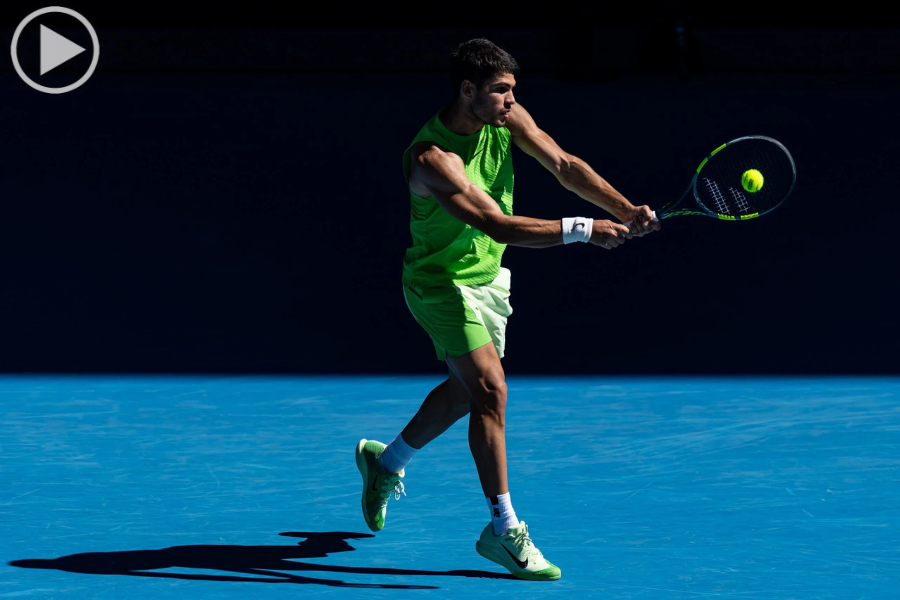
The confirmed professional line-up is headlined by the game’s current power pair, Carlos Alcaraz and Jannik Sinner, alongside leading names from both men’s and women’s tennis:
- Carlos Alcaraz
- Jannik Sinner
- Alexander Zverev
- Felix Auger-Aliassime
- Lorenzo Musetti
- Alexander Bublik
- Daniil Medvedev
- Tommy Paul
- Iga Swiatek
- Coco Gauff
- Elena Rybakina
- Jasmine Paolini
- Belinda Bencic
- Naomi Osaka
Celebrities will also feature, including Taiwanese singer Jay Chou, adding to the entertainment factor of the showpiece final.
Rivalry sets the tone
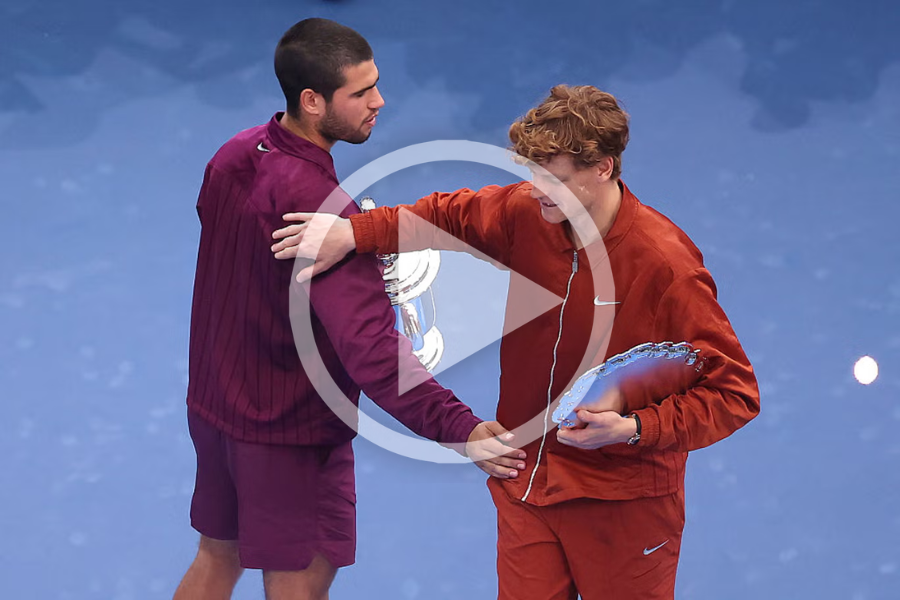
The wider context to the event is the tightening rivalry between Alcaraz and Sinner, whose dominance across 2025 left little room for others. Each continues to shape the other’s trajectory. Alcaraz arrives seeking his first Australian Open title and the career Grand Slam; Sinner bids for a third consecutive triumph in Melbourne. Their parallel journeys are increasingly intertwined, both competitively and psychologically.
Alcaraz’s off-season decision to part ways with long-term coach Juan Carlos Ferrero added further intrigue. Ferrero has spoken of “contractual matters”, while the split inevitably raises questions about timing and direction for a world No 1 at the height of his powers. Sinner, meanwhile, has openly critiqued his own “predictable” passages of play in defeat, signalling a willingness to adjust even when already ahead of most of the field.
The two players’ exchanges have been good-natured but pointed, with Alcaraz having smiled on court: “Hope you’re gonna be ready for next year.” Beneath the humour lies a mutual acceptance that each is the other’s primary reference point.
Why the One Point Slam matters
The One Point Slam reflects tennis’s appetite for experimentation. Its single-point structure produces instant jeopardy and gives amateurs a genuine shot at a life-changing reward. It also offers fans a relaxed yet high-stakes glimpse of the biggest names before the serious business of the Australian Open begins.
With Alcaraz, Sinner, Swiatek, Gauff and Osaka all involved, unpredictability meets star power. One clean winner could alter the script. And in a season already framed by the Alcaraz–Sinner rivalry, this compact spectacle provides the perfect opening note in Melbourne.