


Red Bull RB22: Retro Blue Livery Marks the Start of a New Era
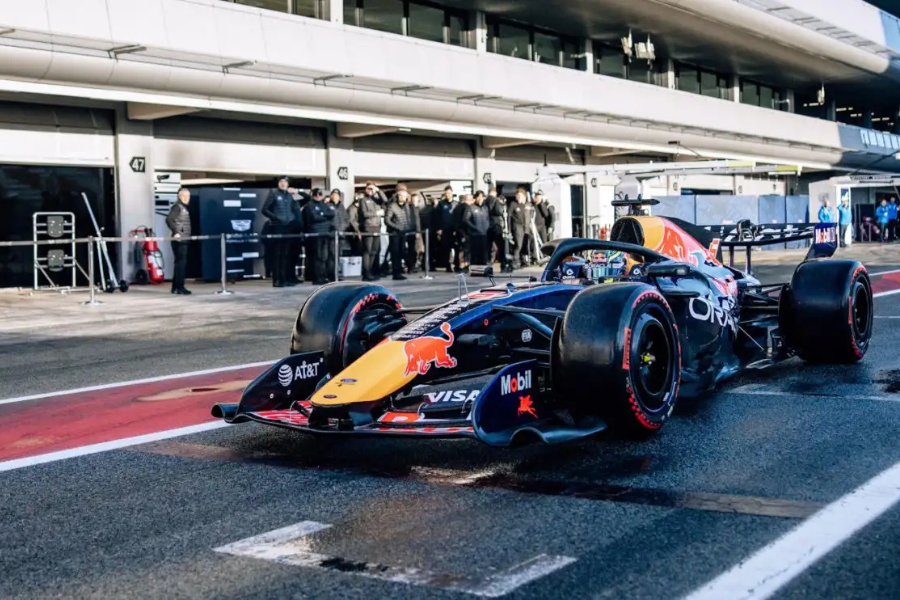
Red Bull Racing have officially launched their 2026 Formula 1 challenger, the RB22, unveiling a striking retro blue livery at a showcase event in Detroit. The design pays tribute to the team’s original Formula 1 look from 2005, but its significance goes far deeper. The RB22 represents the beginning of Red Bull’s most radical transformation since entering the sport — their first season building both chassis and power unit in-house, in partnership with Ford.
The launch also confirmed that 2026 will be Red Bull’s first campaign without either Christian Horner or Dr Helmut Marko since joining the grid. Leadership responsibility now rests with Laurent Mekies, who replaced Horner midway through last season and is embarking on his first full year as team principal.
Mekies urges patience during transition
Rather than projecting immediate success, Mekies struck a deliberately cautious tone at the launch. He admitted Red Bull are likely to begin the season behind their rivals as they adapt to producing their own engines for the first time.
“We know it’s going to come with some difficulties… please bear with us for the first few months,” he said. “It would be naive to think we could start at the same level as manufacturers who’ve been doing this for years. We are going to be trailing them.”
This realism marks a sharp contrast to Red Bull’s recent dominance and underlines how disruptive the 2026 regulation reset is expected to be.
Verstappen returns after losing title by two points
Max Verstappen enters the new campaign determined to reclaim the drivers’ championship after losing out to McLaren’s Lando Norris by just two points in 2025 — one of the narrowest margins in Formula 1 history. Despite Red Bull struggling early last year, Verstappen surged late in the season, winning six of the final nine races to finish just behind Norris.
He will be partnered in 2026 by Frenchman Isack Hadjar, promoted after a highly impressive rookie season with Racing Bulls, making him Verstappen’s fourth team-mate in just over a year.
Verstappen was immediately taken by the RB22’s styling. “I love the new livery — it looks really bold and blue,” he said. “Seeing it in real life was special. It brings back memories of when everything was new in Formula 1, and I’m excited to drive a car that looks so different.”
Ford power units and a leap into uncharted territory
The RB22 is the first Red Bull car powered by Red Bull Ford Powertrains, marking Ford’s return to Formula 1 after more than two decades. The 2026 regulations require engines to operate with a near 50-50 split between electrical and internal combustion power, placing unprecedented emphasis on energy recovery, deployment and thermal efficiency.
Ben Hodgkinson, Red Bull’s powertrains technical director and a former architect of Mercedes’ dominant hybrid era, has described the programme as the biggest challenge of his career. While confident in the facilities and personnel assembled, he has acknowledged that Red Bull began engine development later than established manufacturers.
Engine regulations dispute adds early tension
The new power unit rules have already triggered controversy. Honda, Ferrari and Audi have jointly raised concerns with the FIA about a potential loophole involving thermal expansion of engine components. They suspect that Red Bull Ford and Mercedes could be exploiting material behaviour at operating temperatures to exceed the permitted 16:1 compression ratio, potentially reaching figures closer to 18:1 and unlocking an estimated 15 horsepower advantage.
Hodgkinson rejected the claims, insisting the regulations are “super, super clear” and suggesting that any engineer who does not understand thermal expansion “doesn’t belong in Formula 1”, while maintaining that Red Bull are operating entirely within the rulebook.
A team without Horner, Marko or Newey
The RB22 is also the first Red Bull car produced without any involvement from legendary designer Adrian Newey. Combined with the departures of Christian Horner and Dr Helmut Marko, the 2026 season represents a full leadership reset for the Milton Keynes-based outfit.
Despite this upheaval, Mekies is credited with stabilising the team during the latter stages of last season and overseeing Verstappen’s late title charge. However, the scale of the technical challenge ahead means expectations for early races remain deliberately restrained.
New regulations reshape racing dynamics
Formula 1’s 2026 regulations introduce smaller and lighter cars, with traditional DRS removed and replaced by a suite of active aerodynamic and power deployment modes. Drivers will operate in:
- X-mode, designed for straights, reducing drag and improving top speed.
- Z-mode, used through corners, increasing downforce and stability.
- Overtake mode, which replaces DRS and provides extra electrical power when a car is within one second of a rival.
- Boost mode, available to all drivers at any time for attacking or defending, regardless of proximity.
These systems fundamentally alter how drivers manage races, shifting overtaking from purely aerodynamic advantage towards strategic energy deployment.
Verstappen described the season as “a step into the unknown”, stressing that pre-season testing will be vital in understanding how the RB22 behaves within this new framework.
Can heritage inspire modern success?
The RB22’s retro blue livery is more than a nostalgic flourish — it signals Red Bull’s return to their roots at a moment of profound change. With Laurent Mekies leading the team, Ben Hodgkinson spearheading a brand-new engine programme, and Verstappen returning after losing the title by just two points, the 2026 campaign feels less like continuity and more like a complete reboot.
Whether Red Bull can fight for victories immediately remains uncertain. But as Mekies openly acknowledged, this is a long-term project rather than a short-term gamble. If the Ford partnership matures quickly, the RB22 may be remembered not only for its throwback design, but as the car that launched Red Bull’s most ambitious era yet.