

A Final Three Years in the Making
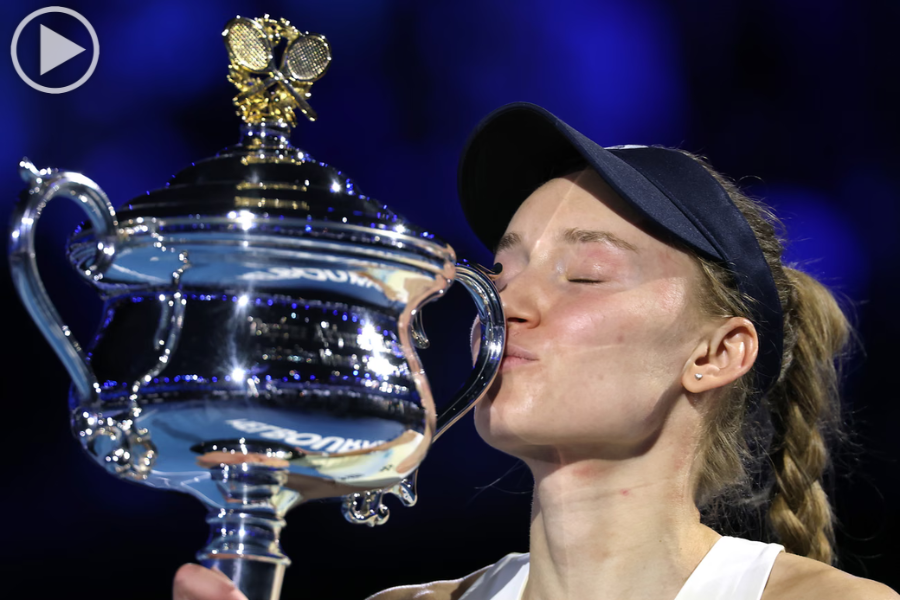
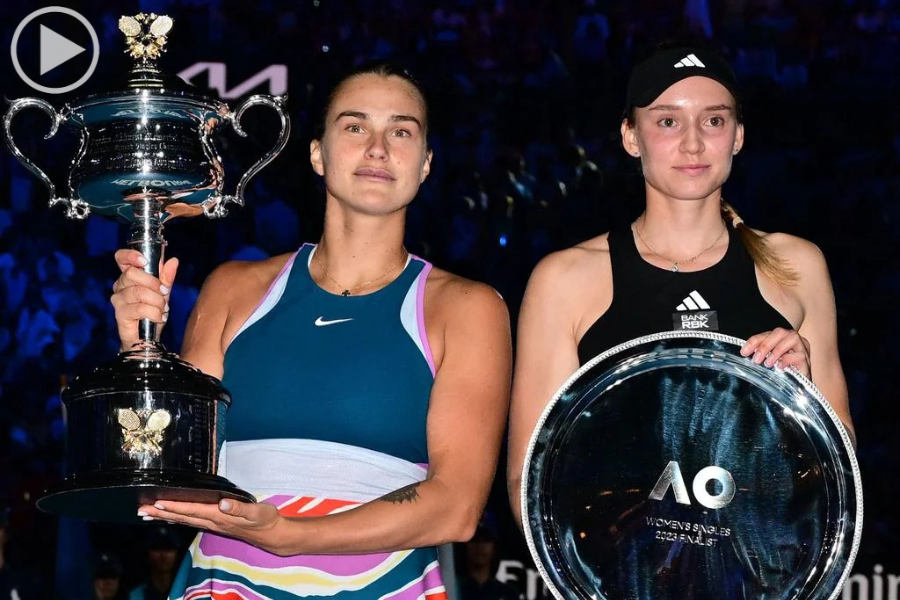
Three years after producing one of the most gripping women’s finals of the decade, Aryna Sabalenka and Elena Rybakina return to Rod Laver Arena for a rematch loaded with narrative weight. Both players arrive unbeaten in sets, both playing the cleanest tennis of the tournament, and both armed with the kind of power that can flip a match in minutes.
Yet this final is not simply about brute force. It is about temperament, resilience and the ability to survive pressure moments when margins disappear.
Sabalenka’s Dominance — and the One Remaining Question
Sabalenka’s presence in another Melbourne final feels almost routine. She has reached four consecutive Australian Open finals and is now chasing a third title in four years and a fifth hard-court Grand Slam overall — achievements that underline her grip on the women’s game.
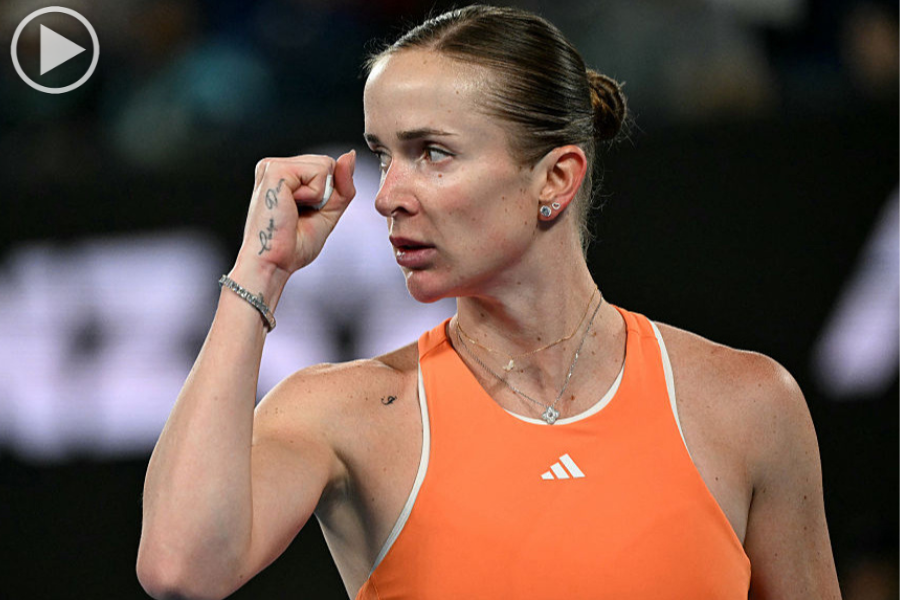
Her run to this final has been ruthless. In the semi-finals, she dismantled Elina Svitolina 6-2, 6-3, striking freely off both wings and barely giving her opponent room to breathe. But just as significant as her shot-making was her emotional control.
That matters because Sabalenka’s biggest vulnerability has not been technical — it has been psychological.
Since the start of 2025, her record in finals stands at 5-5, with losses to Madison Keys at the Australian Open and Coco Gauff at Roland Garros defined less by tactics than by emotional collapses at crucial moments. Those defeats shaped the narrative around her temperament more than her talent.
This fortnight, however, she looks different — calmer, more patient, more willing to accept uncomfortable stretches rather than forcing winners too early. As she put it after her semi-final: “Right now my mentality is like, I’m ready to do whatever.” For Sabalenka, that shift may be the difference between dominance and disappointment.
Rybakina’s Revival and the Power of the Serve
Elena Rybakina’s return to a Grand Slam final feels like the completion of a long detour. The former Wimbledon champion has spent much of the past two seasons battling illness, injury and instability within her support team. Yet since last summer, no player on the WTA Tour has won more matches.
Her semi-final against Jessica Pegula showcased both her ceiling and her fragility. She failed to serve out the match twice in the second set and squandered three match points, allowing Pegula back into contention before eventually closing out the tie-break. That wobble mattered — not because she lost control, but because she recovered it.
Rybakina’s game remains brutally simple and brutally effective. When her first serve lands, she dictates. When it does not, rallies extend, pressure builds and her margins narrow. Against Sabalenka — one of the tour’s most aggressive returners — that balance will be tested relentlessly.
Still, Rybakina arrives with reason for confidence. She has won eight consecutive matches against top-10 opponents, and her calm demeanour often denies rivals emotional cues during tight passages of play. Where Sabalenka burns visibly, Rybakina stays unreadable.
Head-to-Head: A Rivalry with Layers
The numbers reflect just how finely balanced this matchup has become.
Sabalenka leads their overall head-to-head 8-6, but on hard courts — the surface in Melbourne — Rybakina holds a narrow 6-5 edge. Even more telling, Rybakina defeated Sabalenka in straight sets at the WTA Finals last November under fast indoor conditions, exposing vulnerabilities in the world number one’s defence against flat, early-struck returns.
Sabalenka, however, won their most important meeting — the 2023 Australian Open final — coming from a set down to claim her maiden major title. That match was a turning point in both careers: the start of Sabalenka’s reign, and the beginning of Rybakina’s long detour back to the summit.
Three years later, both arrive stronger, fitter and mentally tougher — but with very different scars.
Power v Control: What Will Decide the Final
This final promises relentless pace from the first ball. Both players rank among the biggest servers and hardest hitters in women’s tennis, and both prefer to dictate rather than defend. The contest may hinge on three key elements:
- Sabalenka’s emotional stability under scoreboard pressure
- Rybakina’s first-serve percentage
- Who controls the first three shots of each rally
Sabalenka’s improved variety — including heavier topspin, more disciplined point construction and smarter net approaches — offers her more ways to win than in previous seasons. Rybakina, by contrast, relies on precision and efficiency, shortening exchanges and denying opponents rhythm.
Conditions in Melbourne, with outdoor heat and livelier bounce, favour longer rallies than the indoor courts where Rybakina last beat Sabalenka. That could tilt the physical burden towards Sabalenka — but only if she remains composed when momentum swings.
Legacy Stakes in Melbourne
For Sabalenka, victory would mean three Australian Open titles in four years — a level of dominance rarely seen in the modern women’s game — and confirmation of her status as the era’s defining hard-court force.
For Rybakina, this final represents vindication: proof that her Wimbledon triumph was not an isolated peak but part of a sustained presence at the top of the sport. Another Grand Slam would elevate her from dangerous contender to consistent champion.
Three years ago, their Melbourne meeting announced the arrival of a rivalry. This rematch tests its maturity — not just in power, but in patience, nerve and emotional clarity.
In a tournament short on three-set drama, Sabalenka and Rybakina arrive perfectly placed to deliver the Australian Open final the sport has been waiting for.