

Match Overview
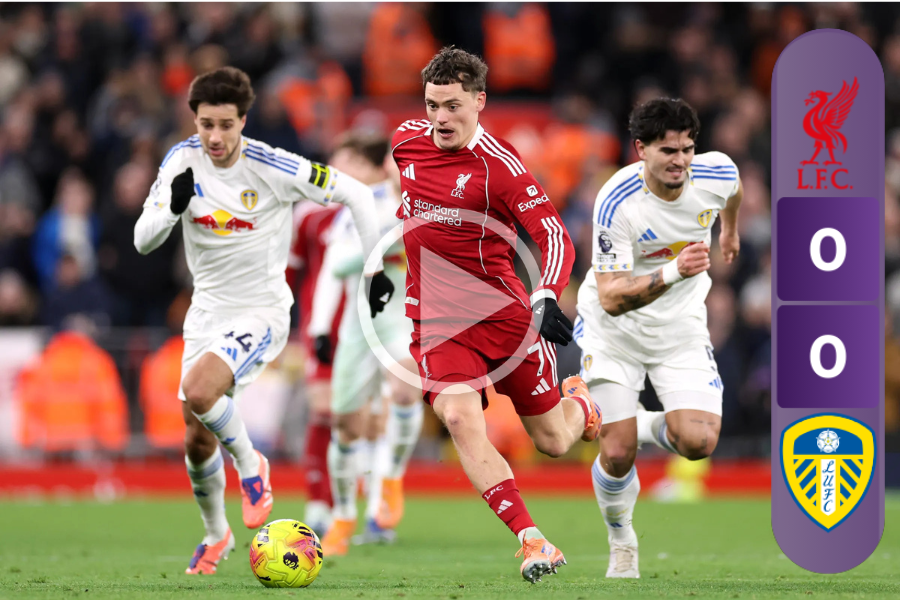
Liverpool’s push for maximum points at Anfield was halted as Leeds United delivered a disciplined and tactically mature performance to secure a 0–0 draw in the Premier League. Despite territorial dominance and sustained pressure, the home side were unable to convert control into goals, while Leeds executed their defensive plan with precision and resilience.
The match was played at a high tempo, particularly in the opening half, with Liverpool dictating possession and probing for openings. Leeds, however, remained compact, limiting space between the lines and forcing Liverpool into wide areas where clear chances were scarce.
First-Half Control Without Reward
Liverpool started aggressively, circulating the ball quickly and pinning Leeds deep inside their own half. Several half-chances emerged through crosses and cut-backs, but the final touch consistently let the hosts down. Leeds’ goalkeeper was rarely forced into emergency saves, largely due to excellent positioning from the visiting back line.
Leeds offered little going forward during this period but succeeded in disrupting rhythm and slowing the tempo whenever Liverpool threatened to accelerate.
Second-Half Tension and Late Drama
The second half followed a similar pattern, with Liverpool increasing intensity and Leeds remaining patient. Substitutions injected energy, yet the breakthrough never arrived.
A decisive moment appeared in the closing stages when Dominic Calvert-Lewin found the net in the 81’, briefly silencing Anfield. The celebration was cut short as the flag was raised, with the goal ruled out for offside after a tight decision. The incident proved to be the closest either side came to altering the scoreline.
Tactical Breakdown
Liverpool’s high defensive line and sustained possession highlighted their ambition, but the lack of sharpness in the final third proved costly. Leeds’ low block, narrow spacing and disciplined tracking of runners neutralised Liverpool’s key attacking zones.
Statistically, Liverpool dominated possession and attacking actions, while Leeds focused on structure, timing and collective discipline rather than volume going forward.
What the Result Means
For Liverpool, the draw felt like two points dropped, especially given home advantage and overall control. For Leeds, it was a valuable result that showcased maturity, tactical intelligence and confidence against elite opposition.
The 0–0 scoreline ultimately reflected a clash between attacking intent and defensive organisation — a match remembered for control, concentration and a crucial decision in the 81’.