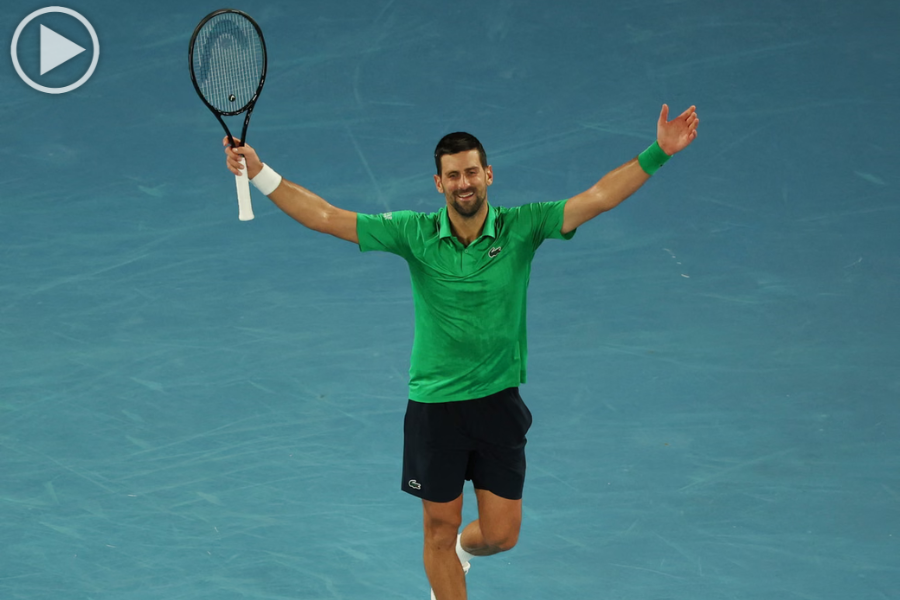

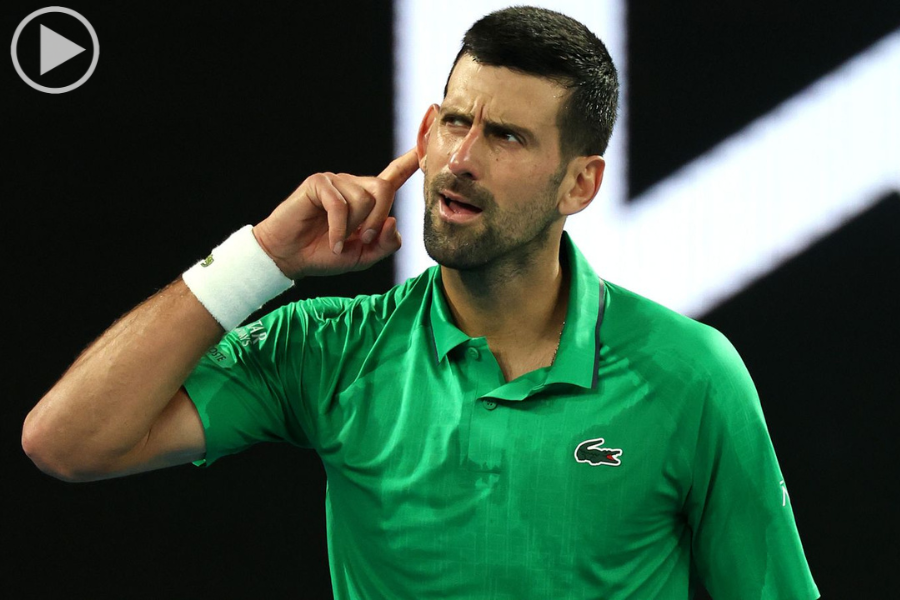

Novak Djokovic once again rewrote tennis history at the Australian Open, becoming the first player in the Open Era to record 400 singles wins at Grand Slam tournaments. The 38-year-old Serbian achieved the landmark with a straight-sets victory over the Netherlands’ Botic van de Zandschulp, winning 6-3, 6-4, 7-6 (7-4) in a match that blended authority, tension and late drama under the roof at Rod Laver Arena.
Djokovic started sharply on a humid Melbourne evening, taking control of rallies and breaking early before sealing the opening set with a sublime crosscourt backhand winner. He continued to apply pressure in the second set, but the contest shifted briefly when Van de Zandschulp, who had beaten Djokovic in Indian Wells last year, began finding depth and rhythm from the baseline.
Midway through that set, Djokovic had a moment of controversy when he casually hooked a ball left after a point, narrowly missing a ball girl stationed near the net. The incident instantly revived memories of his 2020 US Open default. Djokovic later admitted: “I apologised for that. That was not necessary and in the heat of the moment. I was lucky there and I’m sorry for causing any distress to the ball kid or anybody.”
Former British No. 1 Tim Henman described the moment as “crazy”, adding that Djokovic’s concentration dipped noticeably after the incident. On BBC Radio 5 Live, Pat Cash went further, saying the Serb was “three inches from getting defaulted”, underlining just how close the evening came to taking a very different turn.
Despite the distraction, Djokovic closed out the second set and moved within one set of victory. The third brought further complications when he slipped awkwardly and required treatment — not for his ankle, as first feared, but for a blister on his foot. Van de Zandschulp broke serve and later held two set points at 5-6, yet Djokovic responded with trademark composure, forcing a tie-break and taking it 7-4 to complete the win in two hours and 44 minutes.
The result carried historic weight. Djokovic now stands alone with 400 Grand Slam singles victories, extending his advantage over legends such as Roger Federer, Rafael Nadal and Andy Murray. It also marked his 102nd match win at the Australian Open, equalling Federer’s record at the season’s first major, while keeping alive his bid for a record-breaking 25th Grand Slam title.
“I feel really good. It’s been a great start,” Djokovic said afterwards. “Things can change quickly, but when you step on court and the ball rolls, you always have a chance — especially here.” He also acknowledged the challenge posed by the sport’s next generation, naming Carlos Alcaraz and Jannik Sinner as players performing “at a different level”, even as he insisted he is still capable of competing with them.
Djokovic will next face 16th seed Jakub Mensik in the fourth round, as the tournament continues to build toward a potential showdown between established champions and rising stars. The broader men’s draw remains shaped by the presence of Alcaraz and Sinner, while Alcaraz is competing in Melbourne without long-time coach Juan Carlos Ferrero for the first time, adding intrigue to the race for the title.
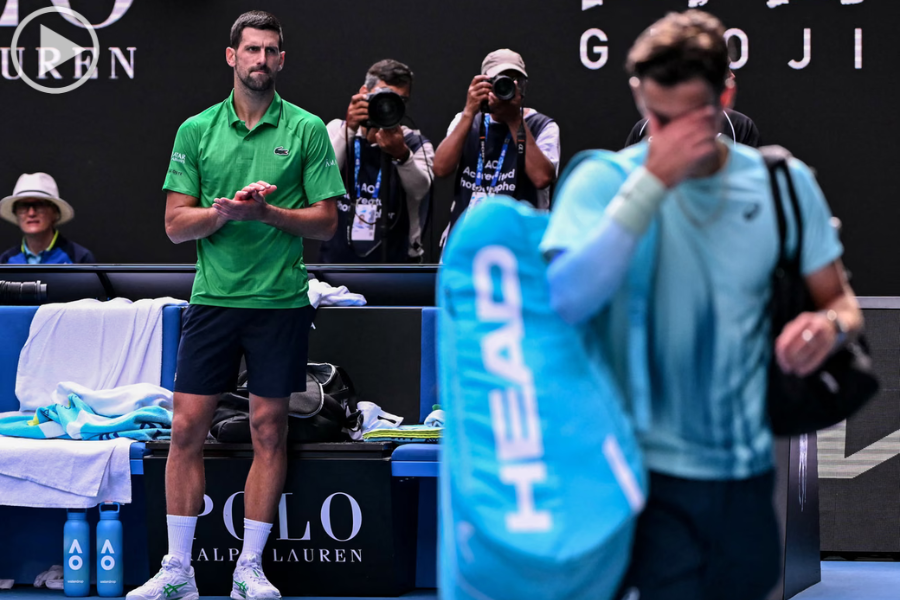
Elsewhere on the same day in Melbourne, the spotlight also shone on Stan Wawrinka, who became the oldest man since 1978 to reach the third round of a Grand Slam. The 40-year-old former champion put up a spirited fight before losing in four sets to ninth seed Taylor Fritz. Marking what is expected to be his final Australian Open, Wawrinka celebrated in trademark style by pulling two beers from his courtside bench and sharing them with tournament director Craig Tiley, as a tribute video played on the big screen.
“I had so many emotions here over the last 20 years,” Wawrinka said. “I won my first Grand Slam here and I’ve always had so much support. I’m sad to leave, but it’s been an amazing journey.”
For Djokovic, however, the night belonged to history. Amid moments of frustration, physical discomfort and intense pressure, he still found a way to prevail. His 400th Grand Slam singles victory was not just another statistic, but a reminder of his longevity, resilience and relentless pursuit of records — qualities that continue to define one of the most extraordinary careers tennis has ever seen.