
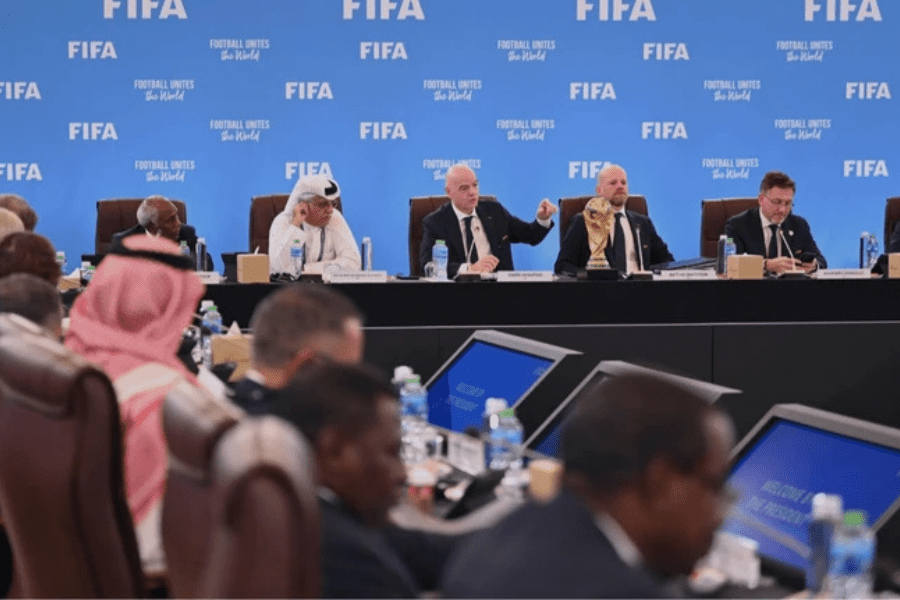
FIFA has officially approved a record financial contribution of $727 million for the 2026 World Cup, setting a new benchmark for international football tournaments. The decision reflects both the expansion of the competition to 48 national teams and the rapid commercial growth of the sport on a global scale.
The majority of the total amount — $655 million — will be distributed as performance-based prize money. This structure ensures that success at every stage of the tournament is financially rewarded, while still providing meaningful income to teams that exit early.
The World Cup winners will receive $50 million, the highest champion’s reward in the history of the tournament. The finalists will earn $33 million, while the third-placed team will take $29 million. The team finishing fourth will be awarded $27 million, underlining the strong financial incentives attached to reaching the final stages.
Teams eliminated at the quarter-final stage will each receive $19 million. Nations exiting in the round of 16 will be paid $15 million, while those knocked out in the round of 32 will still earn $11 million. Even teams that fail to progress beyond the group stage will collect $9 million, ensuring that participation alone delivers significant financial value.
In addition to prize money linked to results, every qualified national team will receive an extra $1.5 million dedicated specifically to preparation and tournament-related expenses. As a result, all participating football associations are guaranteed a minimum payout of $10.5 million, regardless of performance on the pitch.
This financial model highlights FIFA’s intention to balance sporting merit with global development. For many federations, particularly from emerging football regions, the guaranteed income from the 2026 World Cup could play a crucial role in funding infrastructure projects, youth academies and long-term development programmes.
With matches hosted across three countries and an expanded format generating increased revenues, the 2026 World Cup is set to become the most financially significant edition in the tournament’s history, reshaping the economic landscape of international football.