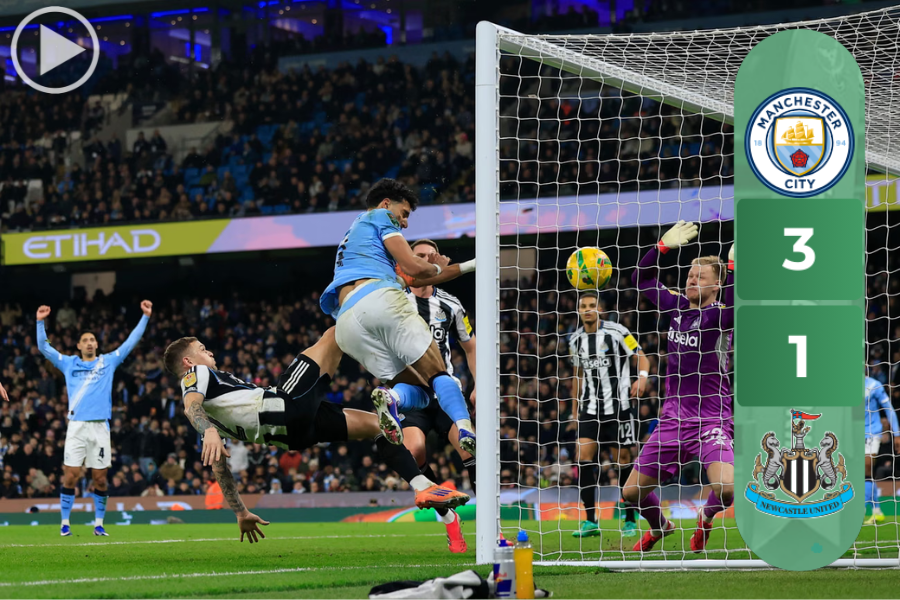


Manchester City secured firm control of their Carabao Cup semi-final tie with a 2–0 victory at Newcastle, in a match defined as much by technology as by talent. Goals from Antoine Semenyo and Rayan Cherki gave City a commanding first-leg advantage, yet the evening’s dominant theme was an extended VAR delay that chalked off what would have been Semenyo’s second of the night.
Semenyo, a January signing already making a sharp impression, opened the scoring shortly after the interval, finishing confidently to silence St James’ Park. Minutes later he appeared to double the lead, only for celebrations to be halted by an exhaustive video review examining whether Erling Haaland had interfered from an offside position.
A malfunction of semi-automated offside technology meant the lines had to be drawn manually, stretching the process beyond five minutes and leaving players and supporters alike in limbo. The eventual verdict – offside due to Haaland’s involvement in the phase – erased the goal and inflamed debate over both accuracy and the spirit of officiating.
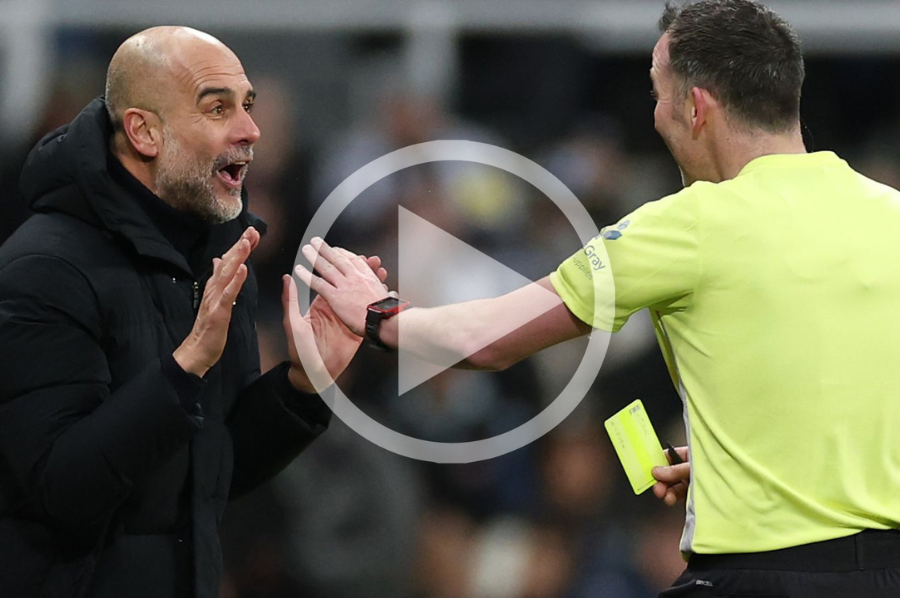
The delay seemed to harden City’s mindset. Pep Guardiola suggested the interruption fuelled his side’s edge, remarking that “I think my players were angry” and that the pause “made us stronger”. The response was visible deep into stoppage time, when Cherki broke clear to sweep in a decisive second, giving City a significant cushion for the return leg.
Guardiola also revisited earlier frustrations with video intervention, questioning consistency across previous meetings and decisions. His comments reflected a broader unease within the game over lengthy reviews and what some perceive as re-refereeing rather than correcting obvious errors.
On the opposite bench, Eddie Howe acknowledged the scale of the task ahead, accepting his team “have left ourselves a mountain to climb” in the second leg. Newcastle created moments of promise but lacked sharpness, with fatigue evident after a congested schedule. Howe stressed that the tie remains alive if his side can strike first at the Etihad.
Reaction beyond the dugouts was equally divided. Some players and pundits argued that, by the letter of the law, the ruling was correct; others questioned whether such marginal and protracted interventions align with football’s attacking ethos. A familiar refrain — “the game has gone” — echoed from voices frustrated by a near six-minute delay that drained momentum from the spectacle.
Supporters’ responses captured the tension between precision and enjoyment. The sense that a legitimate goal celebration had been retrospectively dismantled amplified calls for faster decisions and clearer communication. The incident highlighted how technology, introduced to reduce controversy, can itself become the centre of it.
On the pitch, though, the equation is straightforward. City hold a two-goal lead, an away clean sheet, and growing contributions from new arrival Semenyo and match-winner Cherki. Newcastle must chase the “next goal” in the second leg to revive hopes of returning to Wembley.
The tie remains open, but the narrative will follow VAR as closely as the scoreline. Whether the system enhances fairness or erodes flow is again under scrutiny — and in Manchester City’s case, the delay did more than disallow a goal. It sharpened their resolve.