
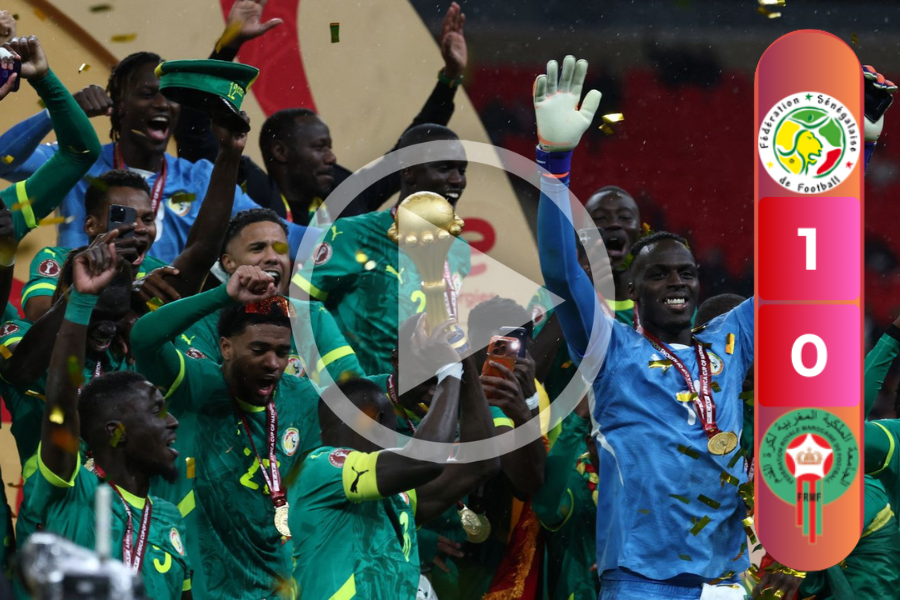

Senegal were crowned champions of Africa after one of the most controversial, chaotic and politically charged finals in the history of the Africa Cup of Nations, edging hosts Morocco 1–0 after extra time at the Prince Moulay Abdellah Stadium in Rabat.
What was intended as a celebration of African football instead descended into accusations, protests and scenes that almost triggered a diplomatic incident between two neighbouring nations, with claims of unsporting conduct, referee pressure and even deliberate interference with Senegal’s goalkeeper equipment dominating the narrative alongside the football itself.
⚽ Goal Details
Goal: Pape Gueye , Minute: 94’(Extra Time) , Senegal
A final that refused to follow the script
Morocco entered the final chasing their first continental title in half a century, buoyed by home support and fuelled by tournament star Brahim Díaz. Senegal, champions in 2021, arrived with a growing sense of grievance after publicly criticising training facilities, logistics and ticketing arrangements during the build-up to the final.
The match itself was tense and physical, but it was the undercurrent of mistrust that shaped the evening. Senegal’s staff were forced repeatedly to intervene as Moroccan ball boys and players interfered with Édouard Mendy’s towels behind the goal, a tactic viewed by Senegal officials as deliberate psychological gamesmanship.
By half-time, the football had taken second place to suspicion.
Disallowed drama and a penalty that shook the stadium
Deep into stoppage time, Senegal believed they had won the final when Ismaïla Sarr headed home from close range, only for the referee to disallow the goal for a foul in the build-up, a decision Senegal felt mirrored earlier incidents where VAR was not consulted.
Seconds later, Morocco were awarded a penalty after Brahim Díaz went down in the area. Senegal’s fury boiled over. Players confronted officials, staff flooded the touchline, and head coach Pape Thiaw ordered his team off the pitch in protest, with police forced to intervene in the stands as tensions threatened to spill beyond football.
“This was injustice,” Pape Gueye later said. “There was a foul against us before and the referee didn’t even look at VAR. We were frustrated. We felt something was wrong.”
“Shameful for Africa”
It took over ten minutes for the match to resume, largely due to the intervention of Sadio Mané, who stayed on the pitch to calm officials, teammates and supporters.
Morocco head coach Walid Regragui did not hide his anger at the spectacle.
“This match was shameful for Africa,” he said. “What happened tonight doesn’t honour our football. Stopping the game like that, surrounding the referee, all of it, this is not what the world should see.”
The miss heard across Africa
Eventually, Brahim Díaz stepped up to take the penalty that could have delivered Morocco their first AFCON title since 1976. Instead of power, he attempted a Panenka. Édouard Mendy caught it cleanly.
The stadium fell silent.
The miss felt symbolic. A match already tarnished by controversy now veered into surreal territory, with Senegal players barely celebrating the save, as if stunned by the scale of the moment and the weight of everything that had preceded it.
Extra time, and the moment of destiny
Four minutes into extra time, Senegal finally found clarity in chaos.
Breaking forward from midfield, Pape Gueye collected the ball and unleashed a ferocious left-foot strike that flew past Yassine Bounou and crashed in off the bar. It was a goal of power, precision and release, silencing Rabat and igniting Senegal’s bench.
From there, Senegal defended with composure, while Morocco, drained emotionally and psychologically, could not summon a response.
Mané’s leadership and Senegal’s resilience
While Pape Gueye will be remembered as the match-winner, the defining figure of the night was Sadio Mané, whose leadership prevented the final from collapsing entirely. His decision to bring teammates back onto the pitch restored order when the match stood on the brink of abandonment.
“Sometimes football must be protected,” Mané said afterwards. “No matter how hard the situation, you must finish the match with dignity.”
Senegal’s victory delivered their second AFCON title in three tournaments and reinforced their status as the dominant force of modern African football, but it came wrapped in controversy rather than celebration.
Morocco’s heartbreak and the politics of defeat
For Morocco, defeat on home soil was devastating, but it was the manner of the loss that hurt most. Brahim Díaz, tournament top scorer and creative leader, saw his campaign defined by one moment of misjudgement rather than five goals of brilliance.
Beyond the pitch, Senegal officials renewed complaints about unfair conditions, citing disrupted training schedules, logistical disadvantages and repeated attempts to influence match officials throughout the tournament, allegations that fuelled the perception that this final was never just about football.
A night African football will struggle to forget
AFCON 2025’s final will live in memory not as a classic, but as a cautionary tale.
A disallowed goal, a missed Panenka, a team walk-off, police intervention, diplomatic tension and accusations of manipulation all converged in one extraordinary evening. In the end, Pape Gueye’s thunderbolt spared African football a result that might have been permanently tainted.
Senegal lifted the trophy, but the tournament’s most enduring image may not be celebration, but chaos — a final remembered as much for disgrace and disorder as for the goal that decided it.